Behind the friendly 💀 sits a set of codes that make it work across every device and platform. If you build websites or apps, these are the values you'll actually use.
Unicode
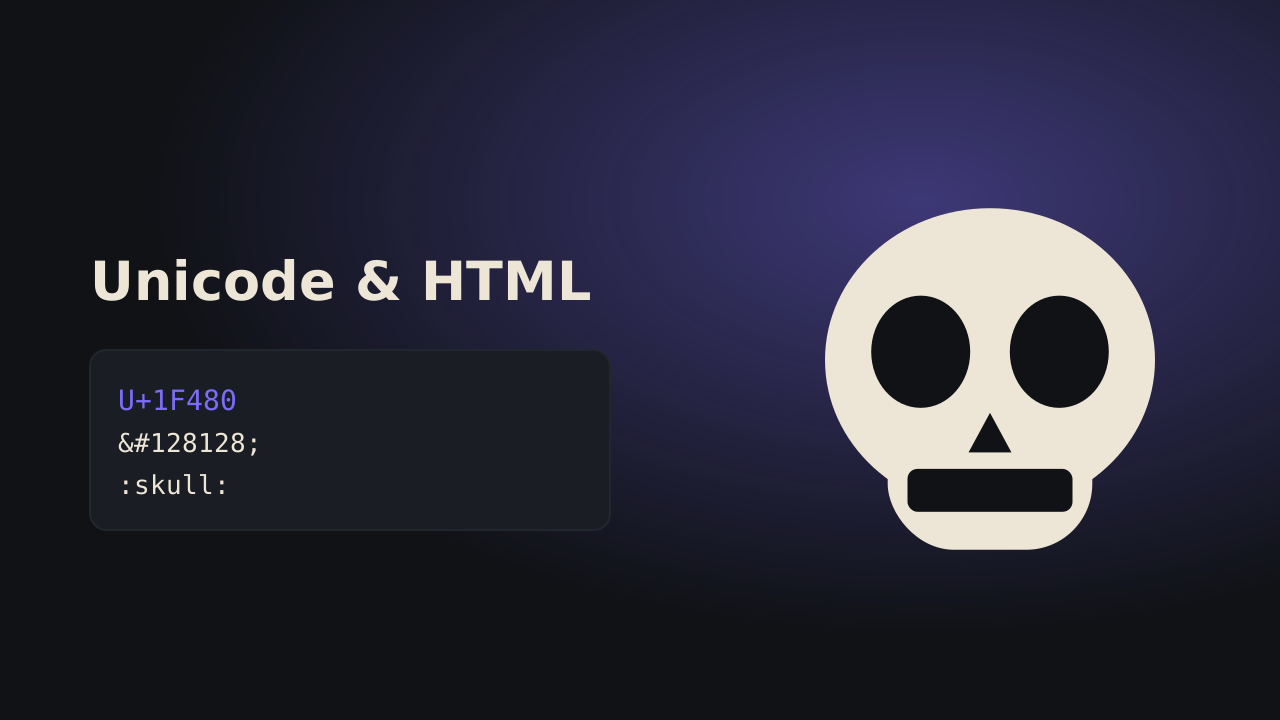
The skull's Unicode code point is U+1F480, with the official name SKULL. It was introduced in Unicode 6.0 back in 2010 and belongs to the Smileys & Emotion group. This single code point is what every platform maps to its own artwork.
HTML entities
To place the skull in a web page without pasting the character, use a numeric entity: 💀 in decimal or 💀 in hexadecimal. Both display 💀 in any modern browser.
Shortcode
On platforms that support shortcodes — Discord, Slack, GitHub and others — :skull: is automatically converted to the emoji. It's the most human-readable form.
Codes for programming
In CSS, use content: “\1F480”; on a pseudo-element. In JavaScript, the escape sequence is \u{{1F480}}. In Python, it's \U0001F480. In a URL, the encoded form is %F0%9F%92%80.
Why the codes matter
Using codes instead of the raw character avoids encoding problems in files that aren't saved as UTF-8, and gives you precise control in stylesheets and scripts. Every value here is copyable from the code panel.